
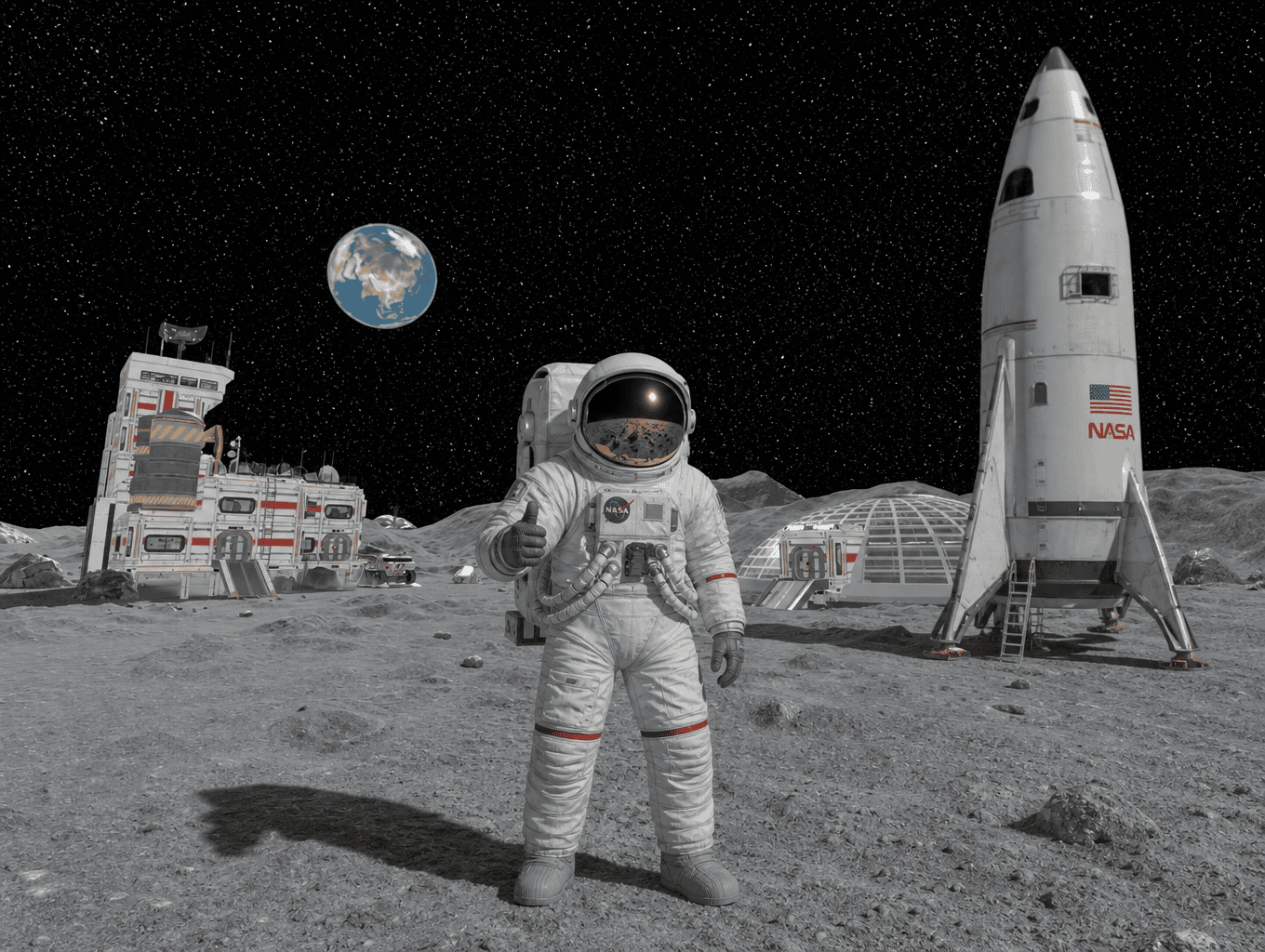
From Static Pages to Living Understanding
For generations, the textbook has been the anchor of classroom instruction. Pages filled with diagrams, timelines, vocabulary lists, and case studies have shaped how students encounter the world’s knowledge.
But a quiet shift is underway.
In classrooms using immersive learning, students are no longer just reading about concepts. They are standing inside them.
This is not about replacing textbooks. It is about reimagining what a “textbook” can become when paired with immersive technology.
And the impact goes far beyond engagement.
When Learning Stops Being Observed and Starts Being Experienced
Traditional instructional materials are built for observation. Students look at a photo of a volcano. They read about plate tectonics. They memorize the stages of an eruption.
Now imagine students standing at the rim of that volcano. Watching pressure build beneath the surface. Walking through layers of the Earth and seeing how forces collide in real time.
When students step inside the content, something fundamental changes:
-
Abstract ideas become spatial and tangible
-
Sequences become stories
-
Systems become environments
-
Memory becomes meaning
Instead of decoding information, students begin inhabiting it.
This shift transforms learning from passive intake to active construction.
From Recall to Reasoning
One of the most powerful changes immersive learning introduces is how students think about what they learn.
In a traditional model, mastery often means being able to recall facts:
Dates. Definitions. Formulas.
In an immersive model, mastery begins to look different:
Can students interpret what they are seeing?
Can they make connections between systems?
Can they explain cause and effect inside a living environment?
When a student walks through a virtual Roman forum, they are not just learning what Rome looked like. They are reasoning about how architecture reflects power, how public space shapes civic life, and why certain structures endured.
The content becomes a context for thinking, not just remembering.
Why This Matters for School and District Leaders
For administrators, the question is not “Is this exciting?”
It is: “Does this move learning forward in a meaningful way?”
Immersive learning supports several outcomes school leaders care deeply about:
Deeper Conceptual Understanding
Students are better able to grasp complex systems when they can explore them spatially and interactively.
Stronger Knowledge Retention
Experiences are encoded differently in the brain than text alone. Students remember where they stood, what they saw, and how concepts connected.
More Equitable Access to Experience
Not every school can travel to historical sites, labs, or ecosystems. Immersive environments democratize access to those experiences.
Alignment with Higher-Order Standards
Analysis, synthesis, and evaluation are naturally embedded when students explore dynamic environments rather than static pages.
This is not about adding another digital layer. It is about strengthening the instructional core.
Technology as Infrastructure, Not Decoration
At Optima, we view immersive technology the same way we view libraries, laboratories, or art studios.
They are not extras.
They are environments where thinking happens.
The power of immersive learning is not in the headset. It is in how it is integrated into instruction:
-
As a space for inquiry
-
As a platform for dialogue
-
As a catalyst for deeper questioning
-
As a bridge between theory and lived understanding
When implemented well, VR does not replace teachers or curriculum. It amplifies both.
What Students Gain When They Step Inside the Textbook
When learning moves from the page into space, students gain more than novelty:
They gain:
-
Perspective
-
Empathy
-
Systems thinking
-
Contextual understanding
-
Intellectual curiosity
They begin to see learning not as something they consume, but something they participate in.
And that shift changes everything.
Looking Ahead: The Living Textbook
The future of education is not paperless.
It is dimension-rich.
The most powerful learning environments will not ask students to choose between reading and experiencing. They will integrate both.
Textbooks will remain foundational.
But they will no longer be the ceiling of what is possible.
They will be the doorway.
And when students step through that doorway, learning stops being something they observe…
and starts becoming something they inhabit.





Leave A Comment