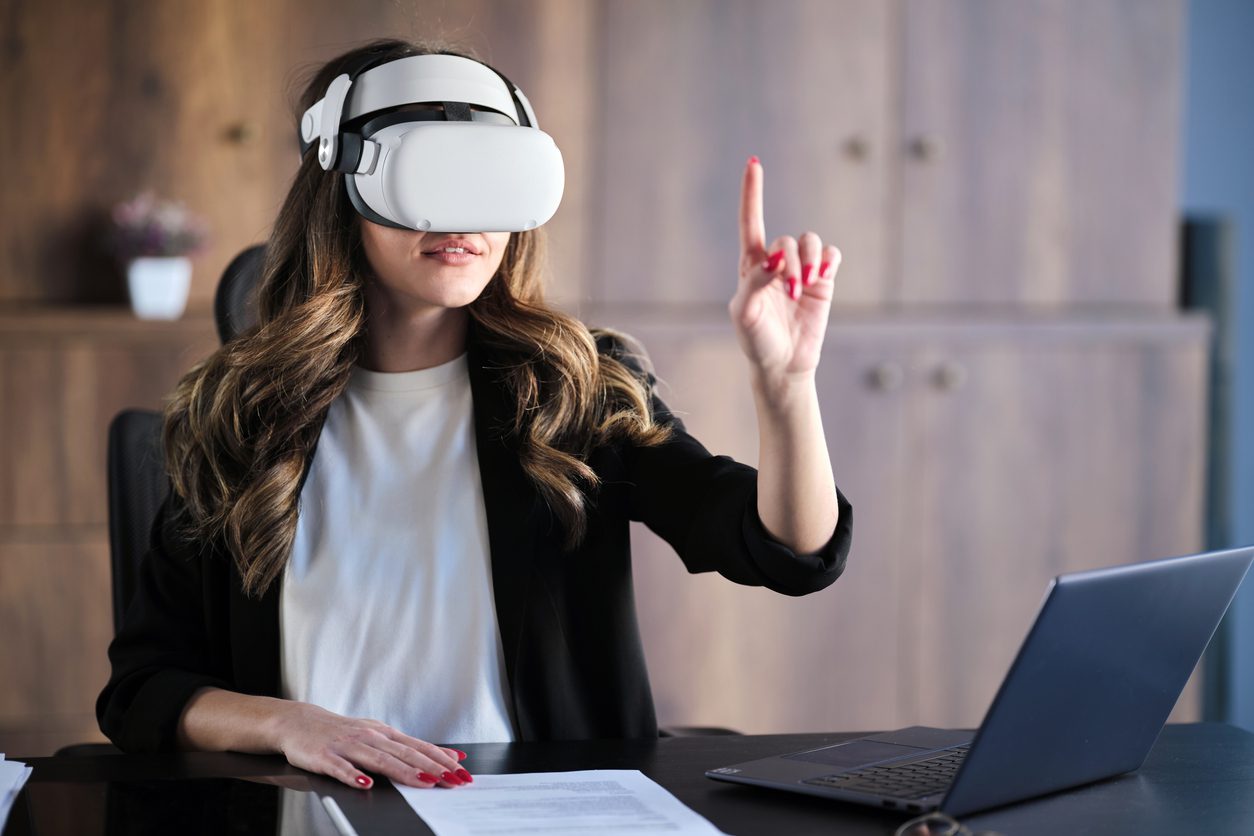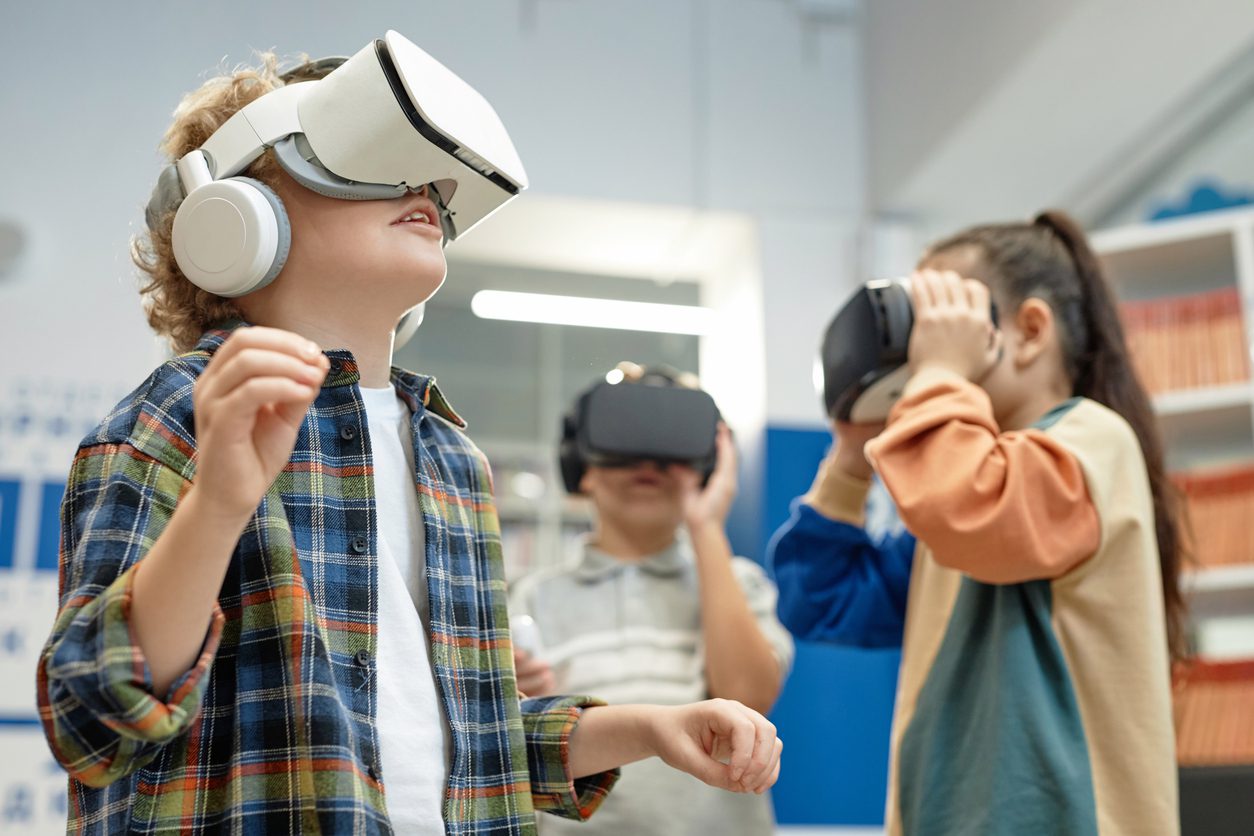

When families and schools first encounter virtual reality as an educational tool, the first question is often a practical one: Is it worth it?
It is a fair question, and one that deserves a thoughtful answer rather than a sales pitch. Understanding the value of VR in education requires looking beyond the upfront investment and examining what it replaces, what it enhances, and what that means for student outcomes over time.
What VR Replaces
Traditional instruction carries significant costs that have become so normalized they often go unnoticed.
Field trips, for example, are a cherished part of K–12 education, yet they are expensive, logistically complex, and frequently inaccessible for rural families, military families, and students in online environments. Transportation, supervision, entry fees, insurance considerations, and lost instructional time quickly accumulate. Even then, students typically experience only a narrow slice of a location’s educational depth.
Immersive VR field experiences reduce those logistical barriers while expanding instructional possibility. Students can revisit locations, pause to analyze details, explore from multiple perspectives, and engage with embedded instructional guidance. The experience is not a replacement for the real world, but it removes many of the constraints that limit traditional field trips.
Science instruction presents a similar challenge. Physical lab materials require ongoing replenishment, safety oversight, storage, and supervision. Certain experiments are restricted due to age or safety limitations. In virtual environments, students can explore molecular structures, conduct simulations, observe chemical reactions, and interact with complex systems in ways that are safe, repeatable, and often more visually precise than traditional demonstrations.
Printed textbooks, static maps, and flat diagrams are also increasingly limited in what they can convey. When a student can explore the Roman Colosseum spatially, move through the layers of the Earth’s crust, or observe planetary motion dynamically, abstract concepts gain dimension and context.
What VR Enhances
Beyond replacing certain traditional expenses, VR enhances instruction in measurable and meaningful ways.
Retention improves when learning becomes experiential. Research consistently demonstrates that learners retain more when they actively experience content rather than passively consume it. Immersive environments engage multiple senses and create contextual memory anchors that make information more durable over time.
Engagement also increases, particularly for students who struggle in traditional settings. Learners with ADHD, sensory sensitivities, or other learning differences often respond well to immersive environments because the experience is structured and focused. The environment reduces peripheral distractions and directs attention toward the instructional objective.
Differentiation becomes more attainable. Within a shared virtual environment, educators can guide discussion while allowing individual learners to explore at their own pace, revisit concepts as needed, and focus on areas aligned with their specific goals. This flexibility supports personalization without fragmenting the classroom experience.
The Honest Cost Conversation
High-quality VR technology requires investment. That is simply true.
However, comparison points matter. When measured against the cumulative cost of repeated field trips, consumable lab supplies, textbook refresh cycles, and the instructional time lost to logistical coordination, the financial picture often shifts. VR is not merely an added expense. In many cases, it consolidates and streamlines costs that already exist within traditional models.
For online institutions such as Optima Academy Online, immersive learning is not a novelty or an accessory. It is an instructional infrastructure that expands access. Students learning from military bases overseas, rural communities, or geographically isolated areas gain opportunities that would otherwise be limited or unavailable.
At Optima, immersive tools are designed to support educators, not replace them. Subject Matter Expert facilitators remain central to instruction. Technology serves as an amplifier, enabling educators to deepen discussion, illustrate complex concepts more clearly, and create shared learning experiences that transcend physical location.
The Bottom Line
Cost and value are not interchangeable.
A lower upfront price does not necessarily equate to stronger outcomes. When thoughtfully implemented within a structured curriculum and guided by skilled educators, virtual reality earns its place as more than a technological enhancement. It becomes a strategic investment in engagement, comprehension, and access.
The real question is not simply what VR costs. It is what becomes possible when barriers are removed and learning gains dimension.

Bridgette Hudak