
Every few years, education technology arrives with a promise: this tool will finally level the playing field. Interactive whiteboards. Chromebooks. Learning management systems. Each wave brought real benefits but also a recurring pattern. Schools with more resources adopted faster, got better outcomes, and widened the gap with under-resourced schools still waiting for infrastructure, training, and funding to catch up.
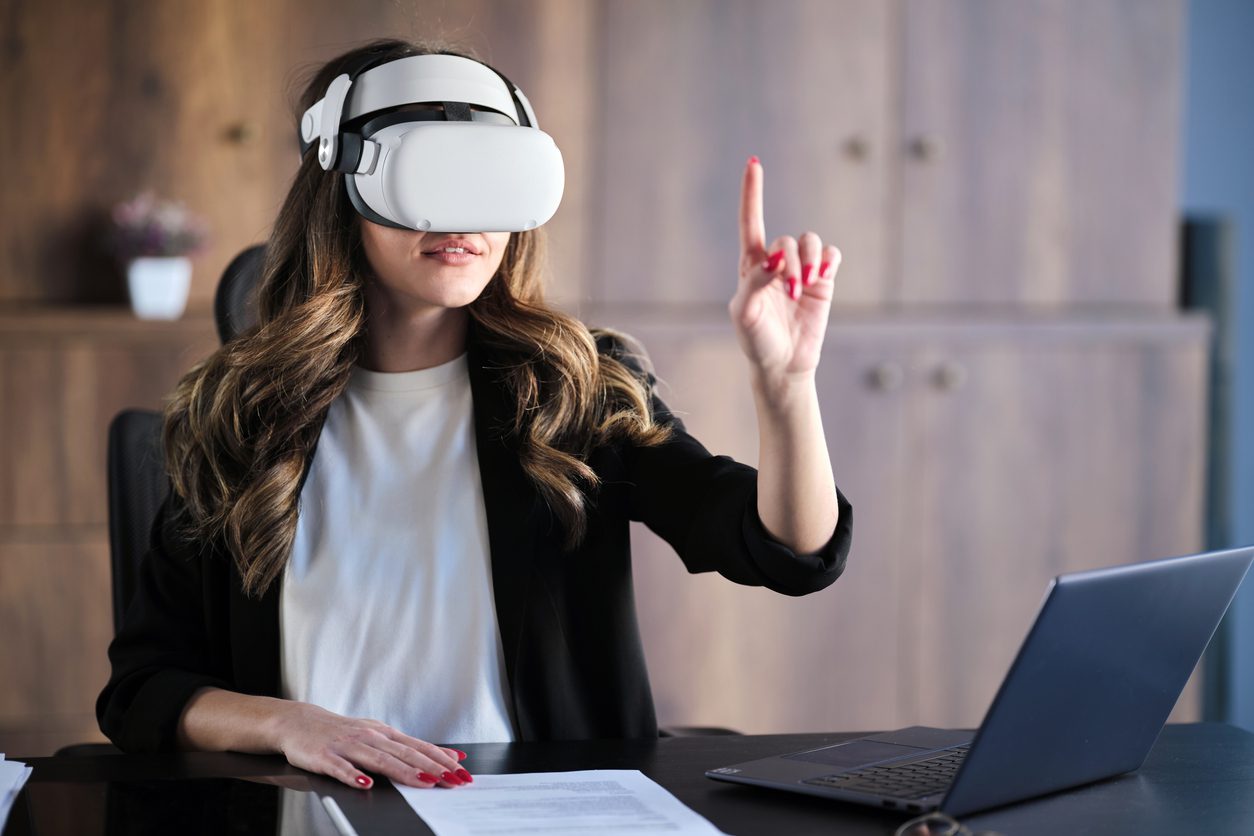
Extended reality (XR) encompassing virtual reality, augmented reality, and mixed reality is the latest technology to carry that transformative promise. And the stakes are higher than ever. XR doesn’t just digitize content; it creates immersive, experiential learning environments that can take students to ancient Rome, inside a human cell, or to the surface of Mars. The learning outcomes are measurable and significant.
But who is “getting” those outcomes right now?
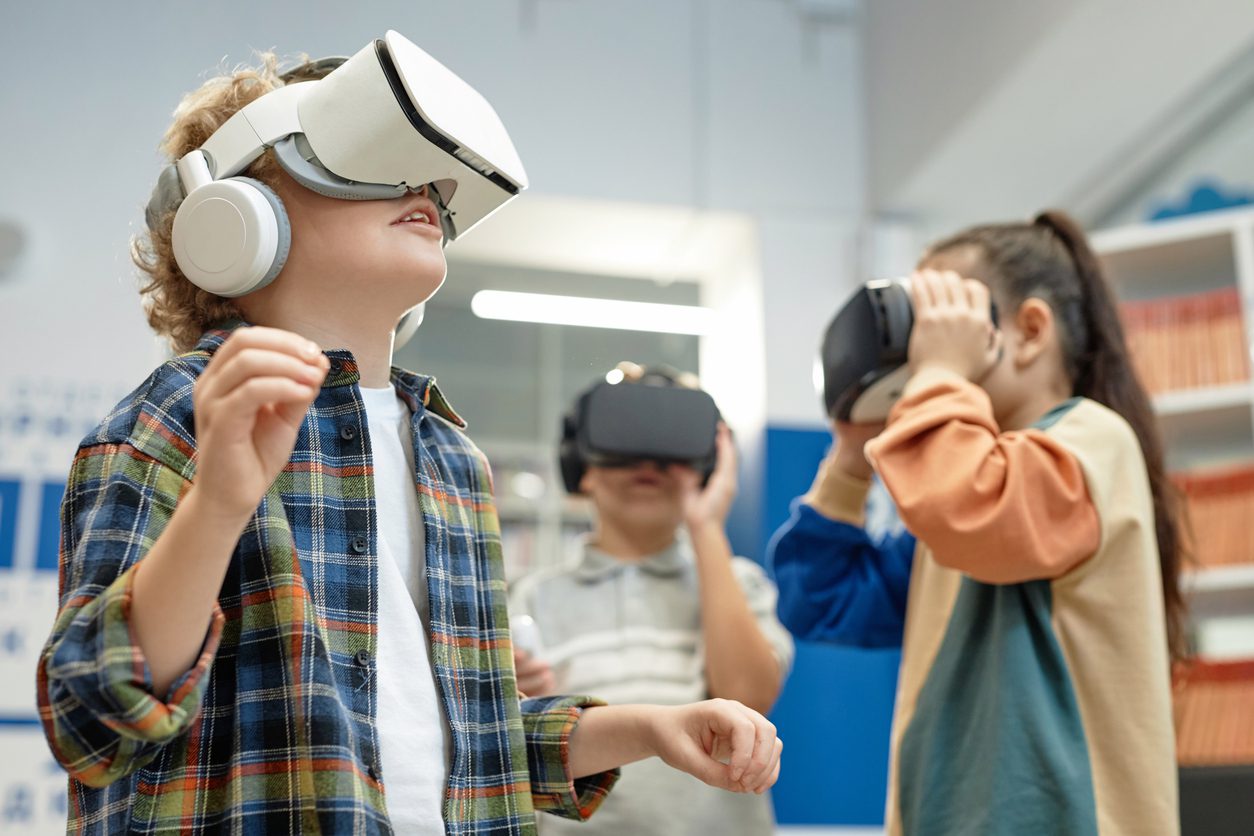
Too often, immersive learning pilots happen in schools that already have robust budgets, technology coordinators, and parent advocacy. Meanwhile, students in under-resourced districts disproportionately students of color, rural students, English language learners, and students with disabilities are left watching XR from a distance.
This doesn’t have to be the story. In fact, if EdTech leaders, district administrators, and technology providers are intentional, XR has a genuine opportunity to be one of the most equitable tools ever introduced into K–12 education. Here’s how.
The Case for XR as a Democratizing Force
Here is what makes XR different from prior EdTech waves, if used intentionally: it has the capacity to give every student access to experiences that were previously available only to the privileged.
A student at a rural school in West Texas who has never left her county can explore the Colosseum in Rome through a VR headset not a static image or a YouTube video, but a fully immersive, spatial experience. A student with social anxiety who struggles in traditional classroom settings can practice presentation skills in a low-stakes virtual environment. A student with dyslexia can interact with three-dimensional models that make abstract concepts tangible in ways text never could.
XR doesn’t just digitize what already exists it creates entirely new forms of access for students whose needs have never been well-served by traditional instruction.
Research increasingly supports this. Studies have found that immersive simulations improve retention, engagement, and comprehension particularly for students who struggle with abstract content presented in text-heavy formats. For English language learners, embodied, visual experiences can bridge vocabulary gaps that would otherwise slow academic progress.
For students with disabilities, XR’s flexibility is especially powerful. Learning environments can be adjusted for sensory sensitivities, pacing can be individualized, and spatial learning can serve students for whom traditional classroom arrangements are challenging. This is not accommodation it is universal design.
What Equity-Centered XR Implementation Looks Like
School and district leaders who are serious about equity don’t just purchase XR they build systems around it. Here are the principles that distinguish equity-centered XR adoption from well-meaning but incomplete deployment:
- Start With the Students Who Need It Most
Pilot programs that launch in the highest-performing schools generate the most visible data but serve the fewest students in need. Equity-centered leaders flip this model. They begin XR pilots in schools with the greatest access gaps not because these schools are test cases, but because closing the opportunity gap requires closing it from the bottom up.
- Build Connectivity Before Deploying Devices
Technology that can’t connect is a paperweight. Before purchasing XR hardware, districts must audit connectivity both in school buildings and, increasingly, for students who may continue learning at home. Partnerships with broadband providers, E-Rate funding, and infrastructure investments are prerequisites, not afterthoughts.
- Prioritize Teacher Readiness as Much as Technology Readiness
The research is unambiguous: technology adoption succeeds or fails at the classroom level. Equity-centered XR programs invest in robust, ongoing professional development. Not a one-day training session real coaching, peer learning communities, and embedded instructional support. Teachers who feel confident with XR use it. Teachers who feel overwhelmed by it quietly return to their traditional toolkits.
- Measure Equity Outcomes Explicitly
If a district isn’t measuring disaggregated outcomes by race, income, disability status, English learner status, and geography it cannot know whether XR is narrowing or widening the opportunity gap. Equity-centered implementation treats disaggregated data not as a reporting requirement but as a feedback loop for continuous improvement.
- Choose Partners Who Share the Mission
EdTech providers that are serious about equity don’t just sell hardware and walk away. They work alongside districts to understand the specific barriers students face, offer flexible pricing models, provide curriculum that is culturally responsive and aligned to diverse student populations, and remain accountable to outcomes not just adoption metrics.
The Funding Landscape Has Changed
One of the most common barriers to XR adoption in under-resourced districts is the assumption that it simply isn’t fundable. That assumption is increasingly outdated.
Federal and state funding streams have expanded significantly. Title I funds can support technology infrastructure when tied to learning outcomes. E-Rate continues to fund connectivity. Several states have introduced education savings account programs and digital learning initiatives that make individual school technology investments more feasible. ESSER funds, though winding down, have created precedent for technology spending that serves learning continuity and equity goals.
Philanthropic partnerships and grants specifically targeting equitable EdTech adoption are also growing. For district leaders and school administrators who feel that XR is out of reach, the first conversation worth having is with a funding strategist not with a vendor.
The question isn’t whether districts can afford to invest in immersive learning. It’s whether they can afford not to and whether that investment will serve every student, or only some.
A Different Kind of EdTech Story
The narrative about XR in education doesn’t have to end the same way as every previous EdTech wave. The technology is ready. The research is there. The funding mechanisms while complex exist.
What’s required now is the commitment: from EdTech providers to build tools that are accessible, affordable, and culturally responsive; from district leaders to begin with their most underserved students rather than their most resourced schools; from state and federal policymakers to prioritize equity in how they fund and evaluate technology adoption.
At OptimaXR.ai, we believe immersive learning is not a luxury it is an emerging baseline for what every student deserves. Our approach to XR integration is built around this conviction: that the schools and students who have been left behind by prior technology waves should be the first to benefit from this one.
The opportunity gap in K–12 education is real, persistent, and well-documented. XR will either widen it or help close it. That outcome isn’t determined by the technology. It’s determined by the choices we make in how we deploy it.
We’re here to help districts make the right ones.

Bridgette Hudak