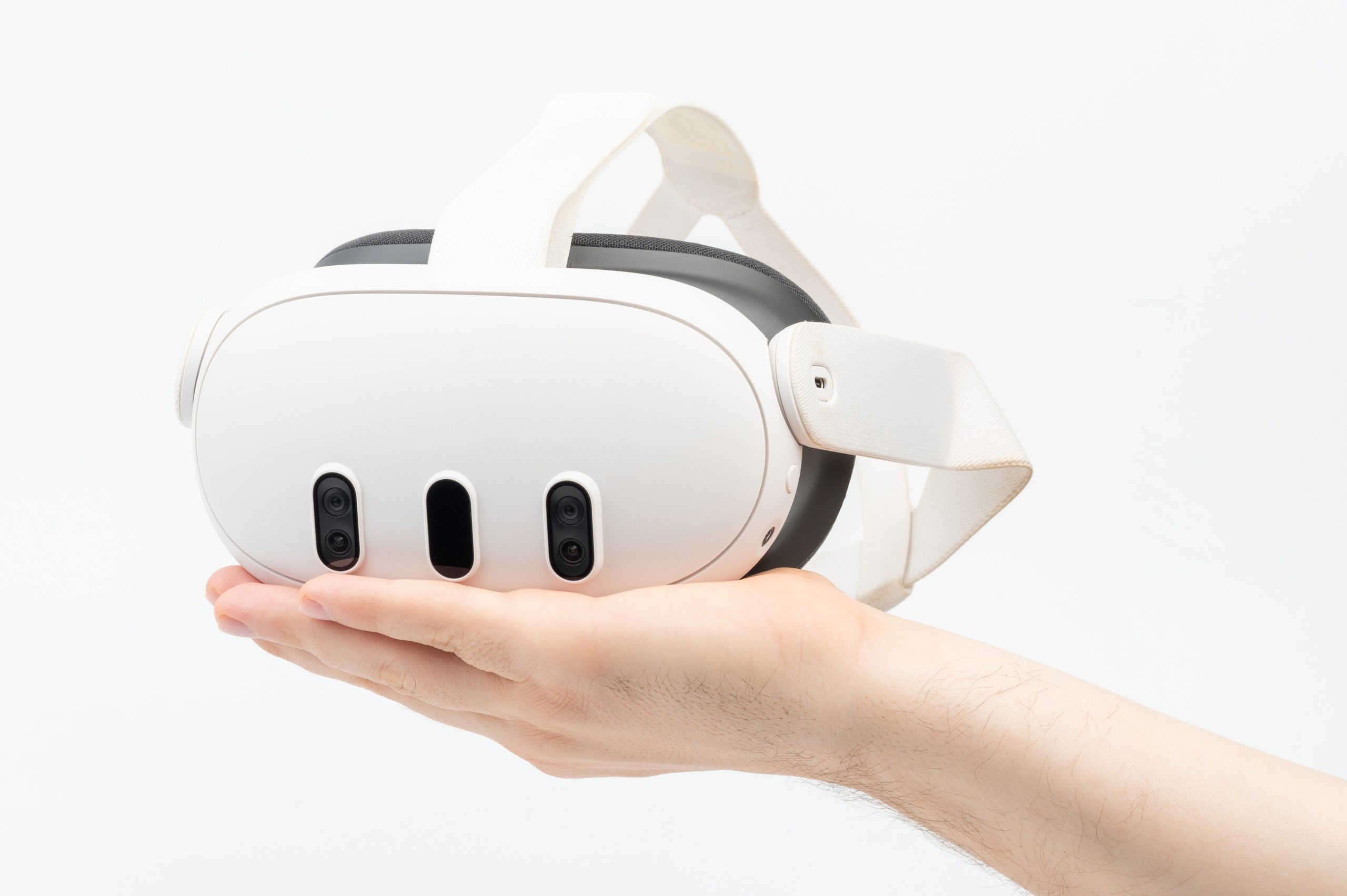
Virtual reality is no longer a question of if in education, but how.
Too often, it is introduced as a spectacle. A moment meant to impress. A headset goes on, a student gasps, a photo is taken, and the room buzzes with excitement.
And while excitement has its place, it was never the point.
If VR stops at “wow,” it becomes another novelty. A fleeting thrill. A shiny object in a crowded edtech ecosystem.
But when VR is designed with intention, when it is woven into instruction rather than layered on top of it, something far more powerful happens.
VR stops being about seeing something.
And starts being about understanding something.
From Engagement to Comprehension
Traditional classrooms ask students to imagine.
Imagine the scale of the solar system.
Imagine the terrain of ancient Rome.
Imagine the inner workings of a cell.
For many learners, imagination alone is a fragile bridge between information and comprehension.
Immersive VR replaces that fragile bridge with experience.
When students can walk the surface of Mars, stand beneath the Roman Forum, or move through a living cell, abstract concepts become anchored in memory. Spatial. Emotional. Contextual.
This is not about entertainment.
This is about cognitive anchoring.
Understanding forms when learners are no longer passive recipients of information, but active participants in it.
Why “Wow” Is Not Enough
A “wow moment” is reactive.
Understanding is generative.
A wow moment says, “That was cool.”
Understanding says, “Now I see how this works, why it matters, and how it connects.”
Education does not exist to impress students.
It exists to equip them.
VR that is built for understanding does not chase visual spectacle for its own sake. It prioritizes:
-
Conceptual clarity over visual excess
-
Purposeful interaction over passive observation
-
Instructional alignment over isolated experiences
In other words, it treats VR not as a product, but as a pedagogical tool.
Learning Happens in the Design
At Optima, we design immersive experiences backwards from learning outcomes, not from visuals.
Before a single environment is built, we ask:
What should the student understand when this experience is over?
What misconceptions should this clarify?
What mental models should this reshape?
Because true immersion is not about realism.
It is about relevance.
A photorealistic volcano is impressive.
A volcano that allows students to observe pressure buildup, magma flow, and eruption cycles in real time is transformative.
Understanding is not created by scenery.
It is created by structure.
Presence Changes How Students Think
There is a fundamental difference between learning about something and learning within something.
When students are present inside an environment:
-
They notice relationships instead of memorizing facts
-
They explore cause and effect rather than isolated outcomes
-
They build intuition, not just recall
Presence invites curiosity.
Curiosity invites inquiry.
Inquiry invites understanding.
And once students understand, they retain.
They apply.
They transfer.
That is the difference between a moment and a mindset.
The Shift Schools Are Making
Across districts and private schools, we are seeing a shift.
Leaders are no longer asking,
“Does this look impressive?”
They are asking,
“Does this deepen learning?”
They want tools that:
-
Support curriculum, not distract from it
-
Empower teachers, not replace them
-
Serve diverse learners, not just early adopters
-
Create continuity across subjects, not isolated experiences
VR built for understanding becomes infrastructure, not novelty.
It becomes part of how a school teaches, not just what it shows.
Understanding Is the Real Innovation
The most powerful innovation in VR is not higher resolution or faster processors.
It is intentional learning design.
When immersive technology is guided by pedagogy, not performance, VR becomes one of the most powerful cognitive tools education has ever had.
Not because it dazzles.
But because it clarifies.
Not because it entertains.
But because it explains.
Not because it is new.
But because it is meaningful.
Where Optima Stands
At Optima, we believe VR earns its place in education only when it helps students think more deeply, see more clearly, and understand more completely.
We are not building for moments that impress.
We are building for learning that lasts.
Because the real power of VR is not in what students see.
It is in what they finally understand.

Bridgette Hudak