
Students deserve purposeful technology that prepares them for the future without replacing the teachers, relationships, and timeless principles at the heart of education.
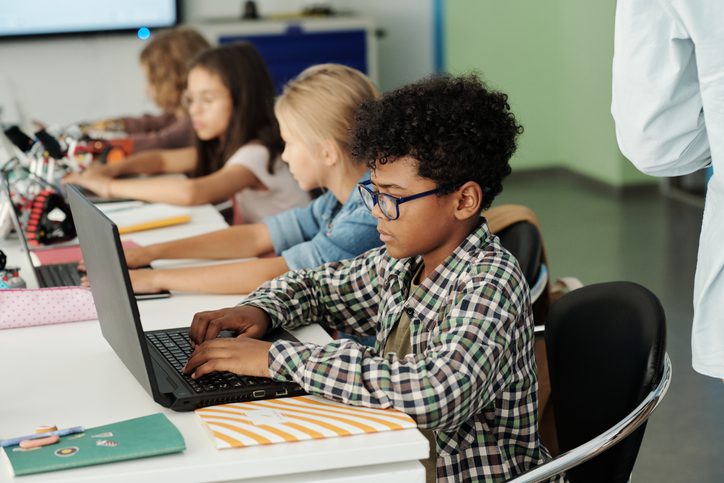
Just in time for the new school year, the U.S. Department of Education released guidance on technology use in the classroom. The initiative recognizes that schools must embrace emerging technologies to prepare students for the future while maintaining a clear distinction between passive recreational screen time and purposeful instructional tools that drive measurable learning outcomes.
Artificial intelligence and virtual reality tools are not only valuable teaching assets today, but they will also touch nearly every facet of the world these students will inherit. The ability to use these tools will be an essential skill for the next generation. Banning technology in our classrooms is a disservice to students, denying them the best education possible in the present and failing to equip them to succeed in their futures.
The question we must be asking is how we integrate technology into education so that it is an asset, not a replacement. As a former teacher, parent, and founder of the world’s first virtual reality school, I’ve spent a lot of time thinking about this balance, and I have some guidance to offer. Make no mistake: AI should be in classrooms, but with deliberate, clear limitations.
‘Make no mistake: AI should be in classrooms, but with deliberate, clear limitations.’
AI Literacy Without AI Dependence
First, in the classroom, we need to hold the line between AI literacy and AI dependence. Students should use AI as a research and creative tool without letting it do their thinking for them. In practice, that means the tool never gets the last word. Students can use AI to gather sources or draft an outline, but they still have to explain their reasoning out loud in a live discussion with a teacher who is trained to ask follow-up questions that reveal whether the thinking is actually theirs. If a student can’t defend his idea in conversation, it doesn’t count as his work. This dynamic is achieved only through live, teacher-led instruction—not through AI or other software.
In our own model, we’ve seen this play out directly within the VR environment. A paragraph about the Colosseum in a history book transforms into a 3D walkthrough of it, with a live, certified teacher in the room asking students to reason through what they’re seeing. Questions like: Why did the design work? And what does the design reveal about Roman civic life? The technology opens the door, but the teacher still leads the exploration. That’s the balance we build every lesson around.
AI and VR encourage students to become creators rather than passive observers. Instead of merely reading about history, science, or economics, students can build, test, simulate, and experiment. That kind of hands-on problem-solving develops the “builder mindset” that is essential in an AI-driven world.
This is why we, as educators, must embrace—not resist—“reindustrializing” the American classroom by moving away from the 19th-century factory model and into a 21st-century immersive model. Today’s students will graduate into a world where AI literacy is as fundamental as digital literacy became a generation ago. Schools that ignore these tools risk preparing students for a world that no longer exists.
Technology Within a Classical Framework
Second, technology is best implemented in the classroom within the classical education framework, which teaches students how to think. Most tools—from words to hammers—can be used for good or for bad, so cultivating virtue in each student is the best way to guide society toward using assets and skills for good.
When integrating technology to enhance education, schools should ask: Does this tool help students pursue truth? Does it strengthen attention or fragment it? Does it deepen understanding or cheapen it? Does it elevate the teacher or replace her? Human interaction must remain dominant in any classroom. AI can handle “computation,” but only humans can handle compassion and critical judgment.
Teachers should integrate technology into traditional educational content: live instruction, books, writing, and teacher-guided discussion. VR, AI, and other technology should be used sparingly and intentionally—as enrichment, not substitution—so that the classroom remains deeply human.
Preparing Students for the World Ahead
I understand the resistance to using technology in K–12 education, but we must not shirk our responsibility to educate children in technological literacy. The alternative isn’t a tech-free childhood; it’s an unsupervised one. Kids are going to encounter AI whether school addresses it or not, and as educators, it’s on us to ensure that they learn to use it with judgment. That means learning under the guidance of an adult who can correct the course.
Our goal should be to create students who are prepared to thrive in a world where these technologies are everywhere. The schools that succeed will be those that embrace innovation without abandoning the timeless foundations of education: human relationships, critical thinking, virtue, and truth. Technology should enhance those principles—not replace them.

admin