

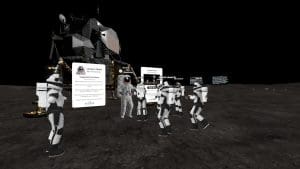
 Play is powerful. It sparks curiosity, fuels motivation, and makes learning stick. In education, play is not a distraction. It is a tool that helps students engage with material in deeper ways. Virtual reality (VR) now takes this concept to the next level through gamified education.
Why Play Matters in Learning
Children learn best when they are active participants. Games encourage focus and persistence. They reward effort and progress, which motivates students to keep going. Psychologists call this intrinsic motivation. Students are not just working for grades. They are learning because the process itself feels rewarding.
When lessons feel like play, students develop stronger memory connections. They take risks without fear of failure. They practice problem-solving in safe, low-stakes environments. This is why gamification is so effective in classrooms.
How VR Enhances Gamified Education
VR creates immersive environments that turn lessons into adventures. Instead of reading about ancient civilizations, students can explore them. Instead of memorizing formulas, they can apply concepts to solve real-world challenges inside a virtual space.
Gamified VR lessons engage students through story-driven exploration and interactive tasks. Students move through environments, make decisions, and see the outcomes of their choices unfold. Each step requires critical thinking and rewards curiosity with new discoveries. The experience itself is the motivation.
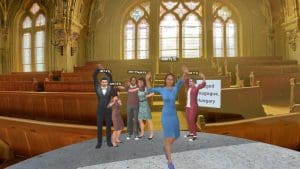
VR also supports collaboration. Students can explore together, share insights, and work as teams to solve challenges. These shared experiences build communication skills and foster a strong sense of community.
 The Psychology at Work
Gamification works because it taps into basic human needs.
-
Autonomy: Students choose how to interact with the material.
-
Competence: They gain confidence as they achieve goals.
-
Relatedness: They feel connected when working with peers.
These three needs, identified in self-determination theory, drive lasting motivation. When combined with VR, the impact multiplies. Students are not only learning. They are experiencing knowledge.
Beyond Engagement
Gamification is not just about making lessons fun. It is about making learning more effective. Studies show that active, gamified learning improves retention. Students remember what they practice, not just what they hear.
For teachers, gamified VR lessons provide valuable data. They can track progress in real time. They can see where students struggle and provide targeted support.
The Future of Classrooms
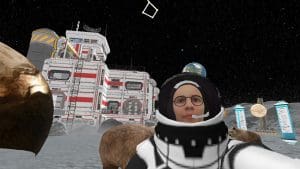 As VR technology grows, gamification will become an essential part of education. Classrooms will look more like interactive labs than lecture halls. Students will not only listen. They will explore, create, and collaborate in virtual worlds.
Gamification in VR is not a trend. It is a shift in how we think about teaching and learning. Play has always been central to human development. Now, with VR, schools can harness the psychology of play to prepare students for the future.





Leave A Comment