
By: Dr. Kim Abel // Edited By: Dr. Reed Randall
What spatial computing is revealing and why educators should pay attention
A virtual classroom gives a glimpse of home behind each student. Some sit in chairs; others swing from a hammock or bounce on an exercise ball. Some students face the frame. Others tip the camera toward the ceiling, demonstrating a presence without a face, a quiet signal of health issues, anxiety, or depression.
Terrin sits in an oversized chair. He averts his eyes from the screen and says absolutely nothing.
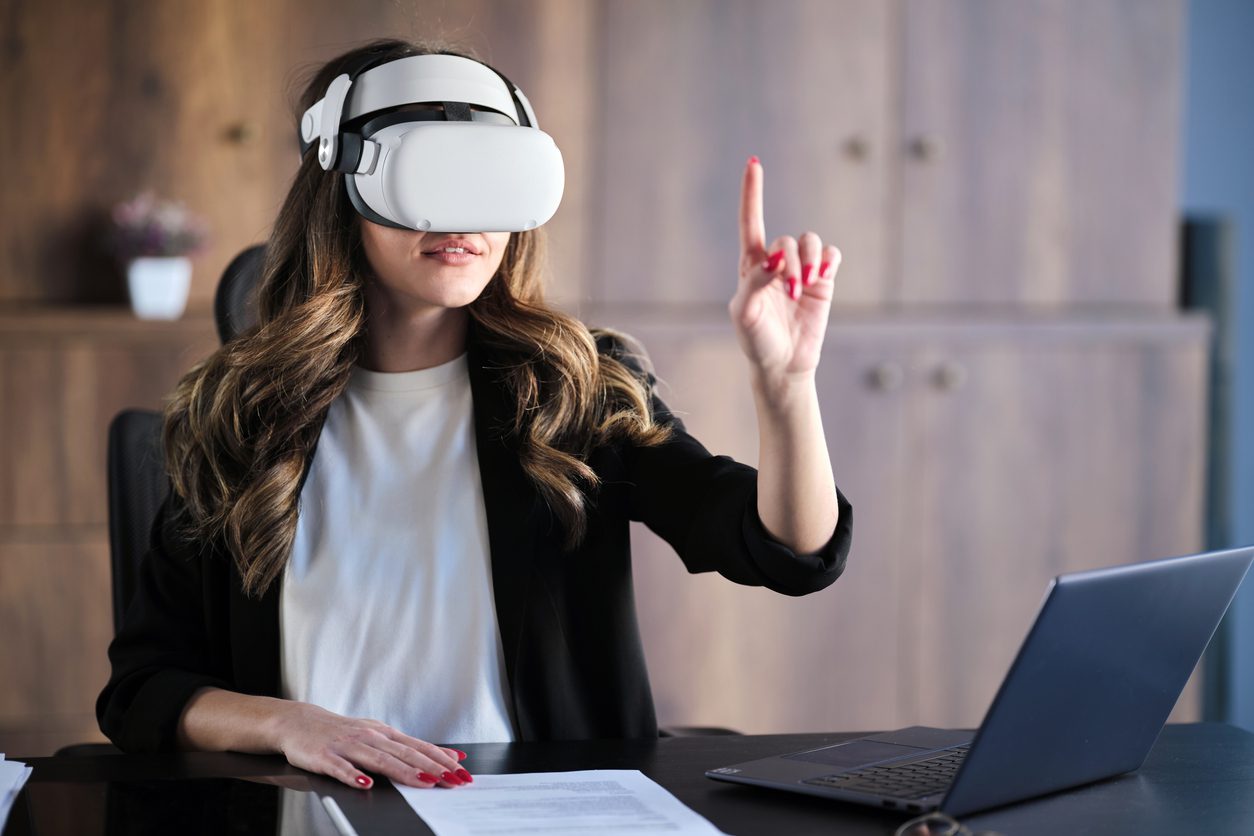
Then Mr. Goodwin invites his class into virtual reality (VR). Today, the students are building representations of the properties of science. Headsets go on. Students enter a location that looks like a museum, form groups, and build using 3D objects, 3D pens, and giant sticky notes to explain the abstract ideas of color, length, and volume, which become tangible.
Away from the main flurry of activity, Terrin builds an incredible display representing flammability. In avatar form, he animatedly explains his project to his peers and teacher. He is no longer quiet. He has found his medium. He has found his voice.
Spatial computing is a return to the oldest kind of teaching, sparked by curiosity and sustained through exploration, questioning, and discovering together.
Accessible Learning
Accessible education often comes with an asterisk representing a gap shaped by geography, circumstance, and available resources. With spatial computing, I see the asterisk disappearing. VR brings resources to the student, not the other way around. VR extends access through experience itself. Research on experiential learning establishes that students learn and retain more through direct experience, where engaging with material in context produces deeper understanding and longer-lasting recall (Kolb, 1984). For students removed from experiences by geography, finances, or circumstance, VR closes a gap that a textbook never could.
A class of Spanish students is a case in point. Six students could afford the Spring Break trip to Puerto Rico. Over a hundred students were still able to tour Old San Juan and hike through the rainforest in VR. With VR, the asterisk of geography disappeared.
VR also serves students who see the world differently. For example, dyslexic learners naturally visualize in three dimensions, a cognitive strength that researchers increasingly recognize as an advantage in spatial reasoning and visual thinking (West, 1997; Eide & Eide, 2011). The VR space accommodates their learning style, rather than the other way around. Text becomes life-sized, and letters become objects that students can manipulate with their hands. Using VR tools, a student might stage A Midsummer Night’s Dream or build a molecular model from the inside out. Students are assessed through creation. The VR medium matches the dyslexic mind.
For other students, access to quality education isn’t about their geography or learning style; it’s about survival. Students navigating serious illness face a choice between their health and their sense of belonging. In avatar form, a student can be present, participating, and leading without anyone seeing their illness. When healing happens, they return to a physical classroom as a learner, not a diagnosis.
Levels of Impact
In our experience, five levels describe learning progression from passive to personalized, adaptive learning, with examples rooted in classical instructional practice.
At Level 1, a teacher loads a premade, recorded VR experience. Students are passengers, riding through a beating heart, watching valves open and close.
At Level 2, a teacher builds the environment. One class visits their favorite football stadium, where the yardage markers become a number line, and the play becomes applied math.
At Level 3, students build. History students studying colonization stand at a water source and construct irrigation channels leading to farmland, trade routes along the water’s edge, and settlements where resources converge.
At Level 4, students explore, then create. High school art students walk through France viewing galleries of French Renaissance work. They analyze the art before building their own portrait using 3D models, observing position, light, and color. Then they take off their headsets and pick up an actual paintbrush to paint their picture.
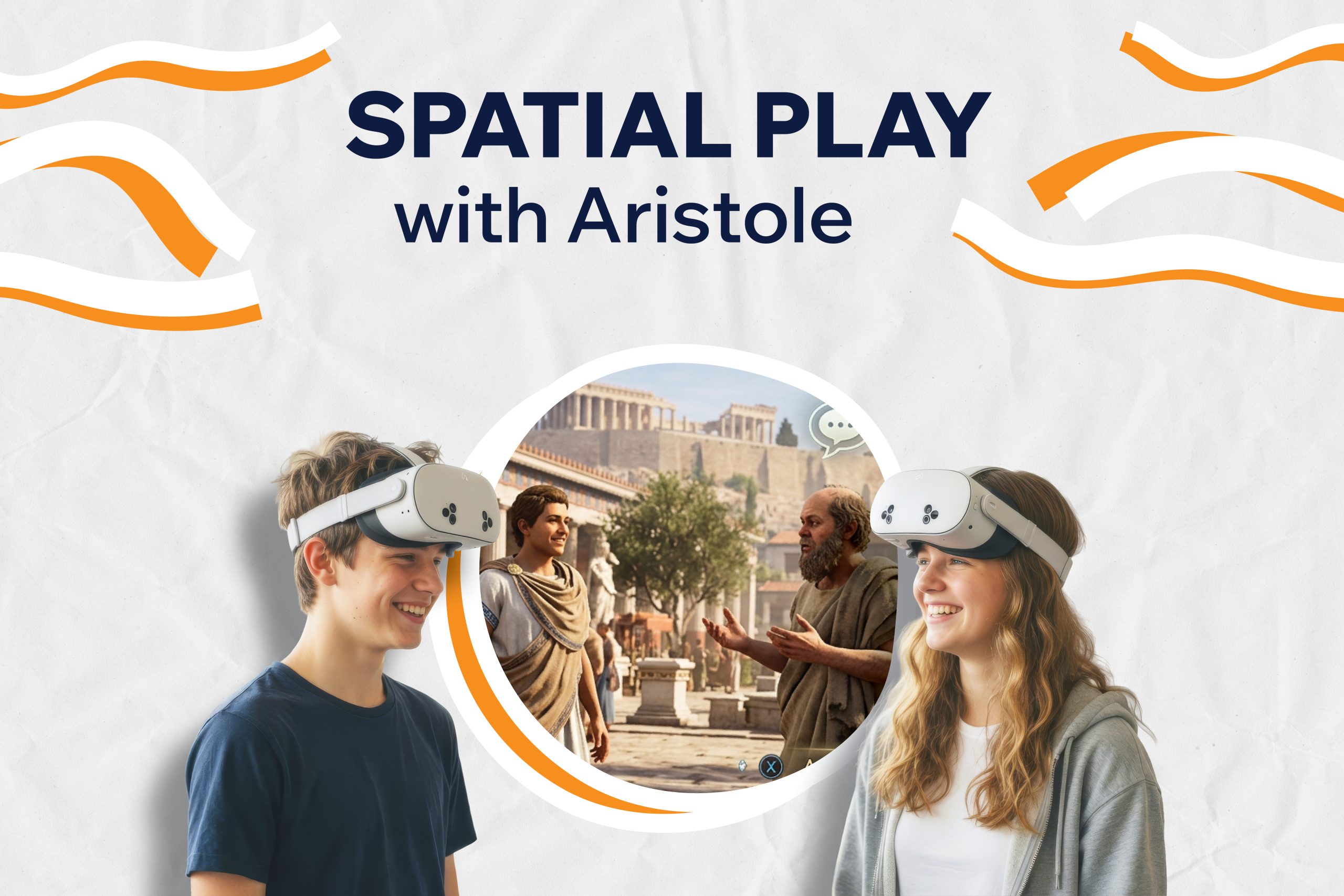
At Level 5, spatial learning becomes personal. A Spanish class enters a village celebrating Día de los Muertos. The students’ objective is to use singular and plural nouns while shopping for items to build their own ofrendas, tables in honor of deceased loved ones. They speak Spanish. The teacher, as a shopkeeper, moves through the village alongside AI characters who speak to students on their skill levels. When students want something personal on their table, such as a favorite food, an AI character generates the image. Students practice their nouns dozens of times without feeling like they are practicing. They are shopping. They are building something that matters. They speak a language in the place where it lives.
Points of Friction
VR implementation requires infrastructure, training, and ongoing technical support that school systems are only beginning to recognize as a core operational need rather than a luxury. Dedicated IT staff are needed to stay current as software and technology evolve.
Research on immersive VR-specific learning outcomes remains limited. Peer-reviewed studies show immersive environments consistently increase student engagement and motivation, though learning outcomes depend heavily on instructional design (Parong & Mayer, 2018).
Growing Evidence of Impact
iReady diagnostic results from the 2024–25 school year at Optima Academy Online, where students learn across all five levels, tell a consistent story across both reading and math. Among middle school students in live VR sessions, the average percent progress to typical annual growth was 236% in ELA and 238% in math. These students grew, on average, more than twice what iReady considers typical growth. On-demand students using the same curriculum but with limited headset access averaged 96% in ELA and 87% in math, landing right around the typical growth benchmark.
One year of data from one school is not a study. But when the same pattern appears in both subjects, it is a signal, an invitation for educators to explore the benefits of spatial computing.
What Must Stay Human
The teacher’s fingerprints are on every corner of a spatial computing environment. AI fills gaps, individualizes paths, and pushes students to the next level, but AI cannot read the room. It cannot remember the moment a student’s face changed when an answer finally clicked, then bring that moment back at exactly the right time. It cannot hold someone accountable with warmth and a genuine understanding of who they are.
Terrin didn’t find his voice because the technology was sophisticated. He found it because a teacher designed a space where his particular kind of brilliance had room to show itself.
That’s the work. The headsets are just the door.
References
Eide, B. & Eide, F. (2011). The Dyslexic Advantage. Hudson Street Press.
Kolb, D.A. (1984). Experiential Learning: Experience as the Source of Learning and Development. Prentice Hall.
Parong, J. & Mayer, R.E. (2018). Learning science in immersive virtual reality. Journal of Educational Psychology, 110(6), 785–797.
West, T.G. (1997). In the Mind’s Eye. Prometheus Books.
(The student referred to as Terrin is identified by a pseudonym. Mr. Goodwin is identified by his actual name with permission.)
Author Bio
Kim Abel, Ed.D., is Head of School at Optima Academy Online, a K–12 virtual public charter school using virtual reality daily. A National Board–Certified Teacher, published author, and speaker, she holds an Ed.D. in Leadership and Learning in Organizations from Vanderbilt University.
Edited by Dr. Reed Randall





Leave A Comment