
For over a century, the classroom has looked remarkably similar: rows of desks, a teacher at the front, textbooks in hand, and learning confined within four walls. But today, we’re witnessing a profound shift—not away from great teaching, but toward a more dynamic, personalized, and engaging model of education.
Welcome to the era of learning ecosystems.
What Is a Learning Ecosystem?
A learning ecosystem is an interconnected network of learning experiences, resources, technologies, and human connections that work together to support student growth. Unlike the traditional classroom model, which relies on a single teacher delivering content in a fixed location at a fixed time, learning ecosystems are:
- Flexible: Learning happens anytime, anywhere
- Personalized: Students can progress at their own pace and explore their interests
- Experiential: Knowledge is gained through immersive, hands-on experiences
- Collaborative: Students, teachers, parents, and technology all play active roles
- Boundless: The walls of the classroom expand to include the world
Think of it this way: traditional classrooms are like libraries—valuable, structured, and contained. Learning ecosystems are like the internet—vast, interconnected, and full of possibility.
Why Traditional Models Are Evolving
The shift isn’t happening because traditional classrooms have failed. It’s happening because the world has changed, and education must evolve to meet new realities:
Students learn differently today. Research shows that immersive, experiential learning drives significantly higher engagement and retention than passive instruction. Students using VR technology are 3.75 times more emotionally connected to content and 275% more confident in applying what they learn.
Access shouldn’t depend on location. A student in a rural community deserves the same opportunities as one in a major metropolitan area. Learning ecosystems break down geographic barriers, bringing world-class experiences to every learner.
The future demands different skills. Tomorrow’s workforce needs critical thinkers, problem-solvers, and collaborators—skills best developed through active, experiential learning rather than rote memorization.
Flexibility is essential. Families move, circumstances change, and learning needs vary. A rigid, one-size-fits-all model simply doesn’t serve the diverse needs of modern learners.
The Role of Immersive Technology
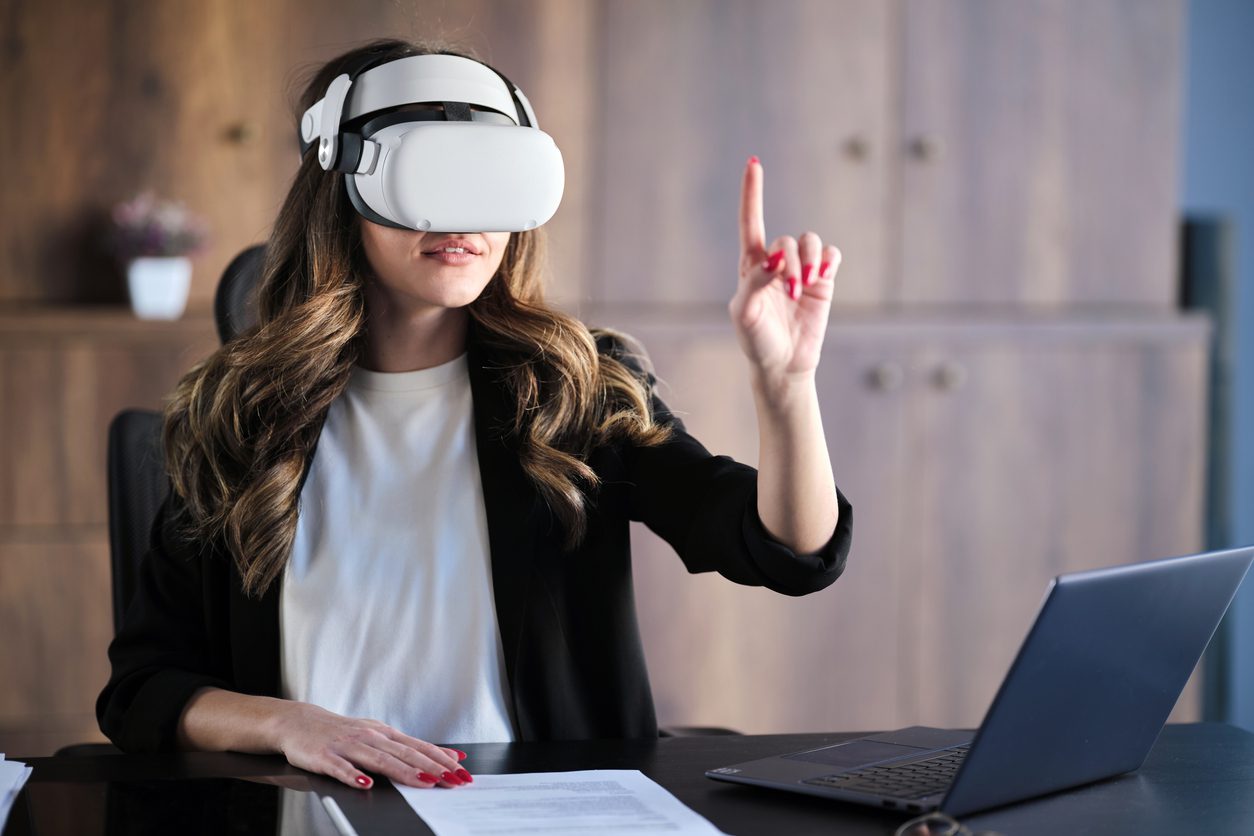
 Virtual reality isn’t replacing teachers—it’s empowering them. Immersive technology is a cornerstone of modern learning ecosystems because it removes the physical and financial constraints that have limited education for generations.
In a learning ecosystem powered by VR:
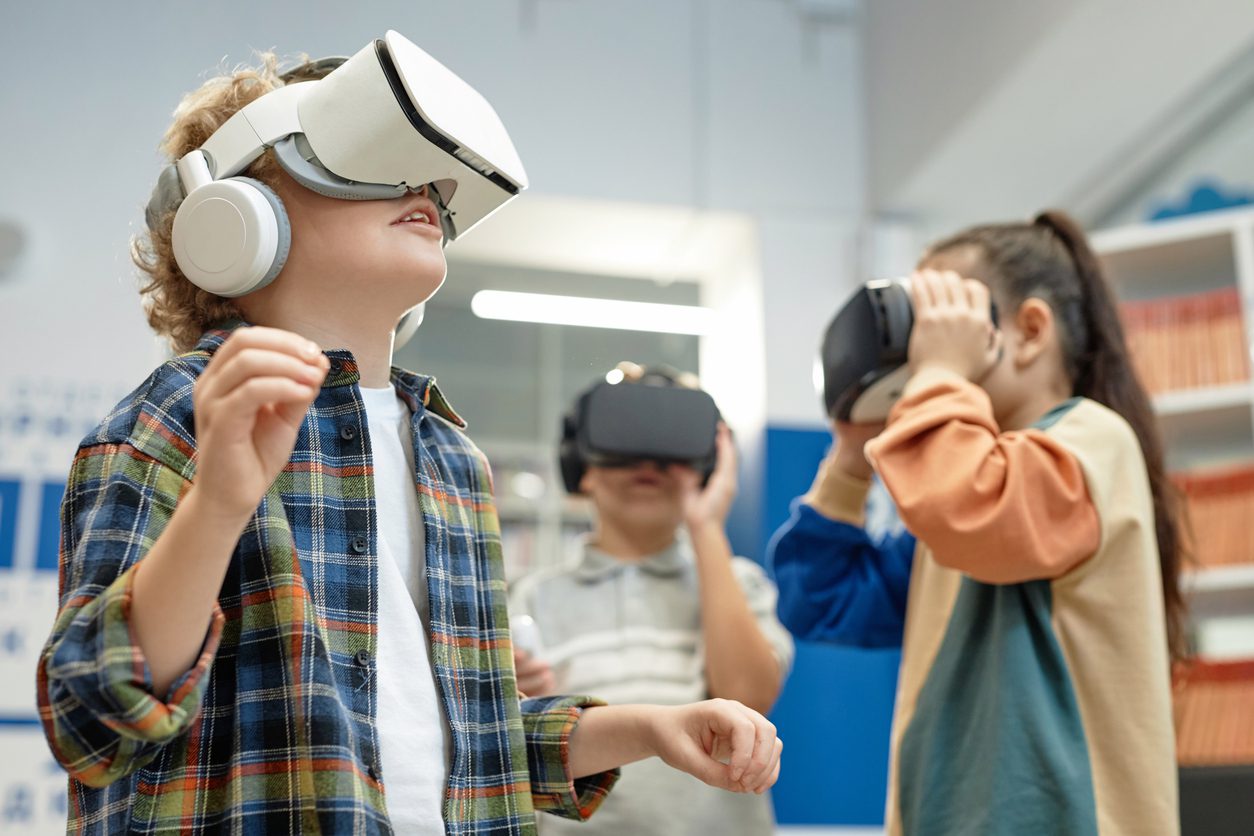
- A biology student doesn’t just read about cells—they shrink down and explore one from the inside
- A history class doesn’t just study ancient civilizations—they walk through the ruins of Pompeii
- Students exploring career paths don’t just hear about professions—they virtually shadow surgeons, engineers, or marine biologists
- A geography lesson isn’t confined to a textbook—it’s a journey to the Amazon rainforest or the Arctic tundra
These aren’t futuristic fantasies. They’re happening right now in schools across the country, and the results speak for themselves: higher engagement, deeper understanding, and greater confidence.
Building Blocks of a Learning Ecosystem
So what does a thriving learning ecosystem actually look like? It’s built on several interconnected components:
1. Immersive Experiences
Virtual reality locations, 3D models, and interactive environments that bring learning to life and make abstract concepts tangible.
2. Expert Instruction
Teachers remain at the heart of the ecosystem—not as lecturers, but as facilitators, mentors, and guides who personalize learning journeys.
3. Collaborative Spaces
Whether virtual or physical, students need opportunities to work together, share ideas, and learn from one another in safe, engaging environments.
4. Flexible Access
Learning shouldn’t stop when the bell rings. Ecosystems provide on-demand resources, live instruction, and self-guided options to fit every schedule and learning style.
5. Real-World Connections
Conversations with AI-powered historical figures, virtual career exploration, and project-based learning that connects classroom concepts to real-world applications.
Education First, Technology Second
Here’s what’s crucial to understand: technology alone doesn’t create a learning ecosystem. The most sophisticated VR headset in the world is just a tool without thoughtful curriculum, skilled educators, and a commitment to student success.
That’s why the most effective learning ecosystems start with educational philosophy and let technology enhance—not replace—great teaching. Teachers aren’t being pushed aside; they’re being given unprecedented tools to reach every student in ways that weren’t possible before.
Closing the Opportunity Gap
 Perhaps the most powerful aspect of learning ecosystems is their potential to create equity. For too long, a student’s access to extraordinary learning experiences has been determined by their family’s income or their school’s zip code.
A field trip to Washington, D.C., might cost thousands of dollars per student. A VR experience can transport an entire class to the Lincoln Memorial for a fraction of the cost—and they can return as many times as they want.
A private school might offer specialized courses in marine biology with lab equipment costing tens of thousands of dollars. In a learning ecosystem, any student can dive into a coral reef, examine marine life up close, and explore ocean ecosystems with stunning realism.
When we democratize access to world-class experiences, we don’t just improve education—we change futures.
The Classroom Isn’t Ending—It’s Expanding
The traditional classroom isn’t disappearing; it’s evolving into something far more powerful. The four walls that once confined learning are expanding to encompass museums, historical sites, distant planets, and microscopic worlds. The teacher’s desk remains central, but now it can exist anywhere—in a physical classroom, a virtual environment, or a home learning space.
Learning ecosystems don’t diminish the importance of educators—they amplify their impact. They don’t isolate students—they connect them to peers, mentors, and experiences in ways never before possible.
The Future Is Already Here
The shift to learning ecosystems isn’t a distant possibility—it’s happening now. Schools across the country are already leveraging immersive technology to boost engagement, improve outcomes, and provide opportunities that once seemed impossible.
The question isn’t whether education will evolve into interconnected learning ecosystems. It’s whether your students will have access to this transformation.
Whether you’re a parent seeking greater flexibility for your child, a private school administrator looking to deepen your reputation for innovation, or a public school leader working to expand opportunities for diverse learners, the tools to build a thriving learning ecosystem are available today.
The classroom as we know it isn’t ending. It’s becoming limitless.

Bridgette Hudak