

A student studying ancient Rome can memorize the names of important landmarks, identify major historical events, then answer questions about Roman civilization. Yet something changes when that same student has the opportunity to explore the streets of an ancient city, observe its architecture, then consider what daily life might have looked like thousands of years ago.
Suddenly, history feels less distant.
Experiencing an unfamiliar place, even virtually, can offer something that traditional instructional materials alone may not provide. It creates opportunities to connect academic knowledge with a sense of place, perspective, plus discovery.
For educators, this raises an interesting question. How much of what students understand about the world is influenced by the places they have had an opportunity to experience?
Learning Beyond Familiar Surroundings
Every student enters the classroom with a different understanding of the world. Some have traveled extensively. Others may have had few opportunities to explore beyond their immediate communities.
These differences can influence the experiences students draw upon when encountering new academic concepts.
Consider a geography lesson about the Amazon rainforest. Students can study maps, examine photographs, then learn about its biodiversity. Those resources provide important information. Exploring a realistic representation of the rainforest introduces another dimension to the lesson.
Students can begin to appreciate its scale, observe relationships within the environment, then develop questions that might not have emerged from a textbook alone.
Exposure to unfamiliar environments does not automatically produce deeper understanding. Its value depends on how educators connect those experiences to meaningful learning objectives.
When thoughtfully incorporated into instruction, exploration can help students build context around ideas that might otherwise remain abstract.
How New Places Create New Perspectives
Encountering unfamiliar environments can challenge assumptions students may not realize they hold.
A student who has never experienced life in a densely populated city may have difficulty imagining how its infrastructure supports millions of people. Another student studying marine ecosystems may understand the definition of a coral reef without fully appreciating its complexity.
Exploring these environments creates opportunities to observe details, recognize relationships, then reconsider existing ideas.
This becomes especially valuable when educators encourage students to move beyond simply describing what they see.
Why was this city designed this way?
How does this environment influence the people living within it?
What connections exist between this place, its history, plus the broader world?
Questions like these can turn an unfamiliar location into a starting point for deeper academic investigation.
Educational Access Should Not Depend on Geography
Field trips have long provided opportunities to connect classroom instruction with experiences beyond school walls. Visiting museums, historical landmarks, scientific institutions, plus natural environments can make academic subjects more tangible.
Unfortunately, access to these experiences is not always equal.
Distance, transportation expenses, scheduling limitations, accessibility needs, plus available school resources can influence which opportunities students receive.
A school located hundreds of miles from the nearest major museum faces different logistical challenges than one situated within walking distance. Students studying marine biology in a landlocked community may have limited opportunities to observe coastal environments firsthand.
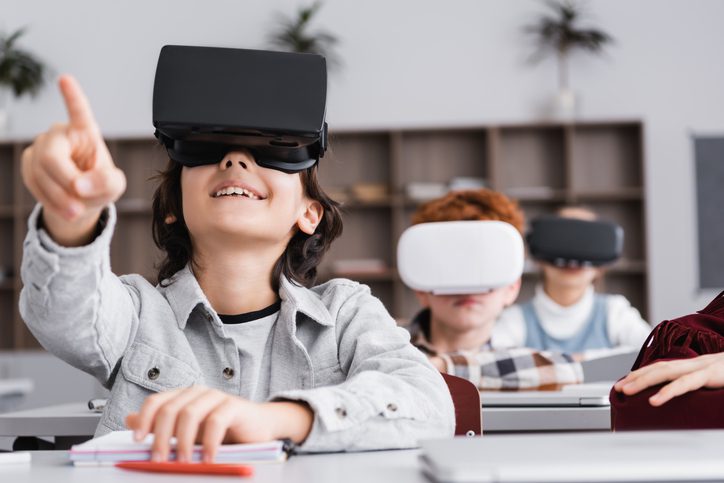
Immersive technology introduces another way to address some of these limitations.
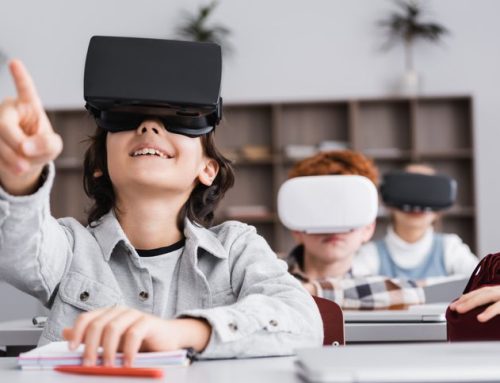
Virtual explorations can allow students to encounter places that would otherwise be difficult, expensive, unsafe, or impossible to visit. These experiences do not replace every benefit of physical travel. They can, however, expand the range of environments educators can incorporate into instruction.
For schools, this creates an opportunity to think differently about educational access.
Rather than limiting experiential learning to destinations within traveling distance, educators can consider which environments would best support a particular lesson.
Turning Exploration Into Understanding
Visiting an unfamiliar place is only the beginning of a meaningful educational experience.
Without instructional purpose, even an impressive virtual environment may become little more than an interesting visual experience.
Educators play an essential role in helping students interpret what they encounter.
Before an exploration, students might investigate the historical significance of a location, identify questions they hope to answer, or make predictions about what they expect to observe.
During the experience, educators can direct attention toward relevant details, introduce new perspectives, then encourage students to connect observations with previously learned concepts.
Afterward, students can reflect on their discoveries, compare expectations with observations, or apply their understanding to a new academic challenge.
This approach transforms exploration from an isolated activity into part of a broader learning process.
A visit to an ancient civilization becomes an opportunity to examine architecture, government, geography, plus cultural development. An exploration of an ecosystem becomes a foundation for understanding environmental relationships.
Educational value comes from what students are encouraged to notice, question, then understand.
Expanding the Places Education Can Take Students
As educational resources continue to evolve, schools have new opportunities to connect students with environments beyond their immediate surroundings.
At Optima, immersive learning experiences help make these opportunities more accessible, giving educators additional ways to introduce unfamiliar places, illustrate complex subjects, plus support meaningful exploration.
Technology serves as the pathway rather than the destination. Its purpose is to help educators create experiences that support curiosity, strengthen understanding, then connect classroom learning with the wider world.
Students may never physically visit every place they study.
Their education does not have to remain limited to the places they can reach.
Sometimes, encountering somewhere unfamiliar is what helps students understand something they already thought they knew.


Leave A Comment